Inflammation: Your Body's First Healing Stage
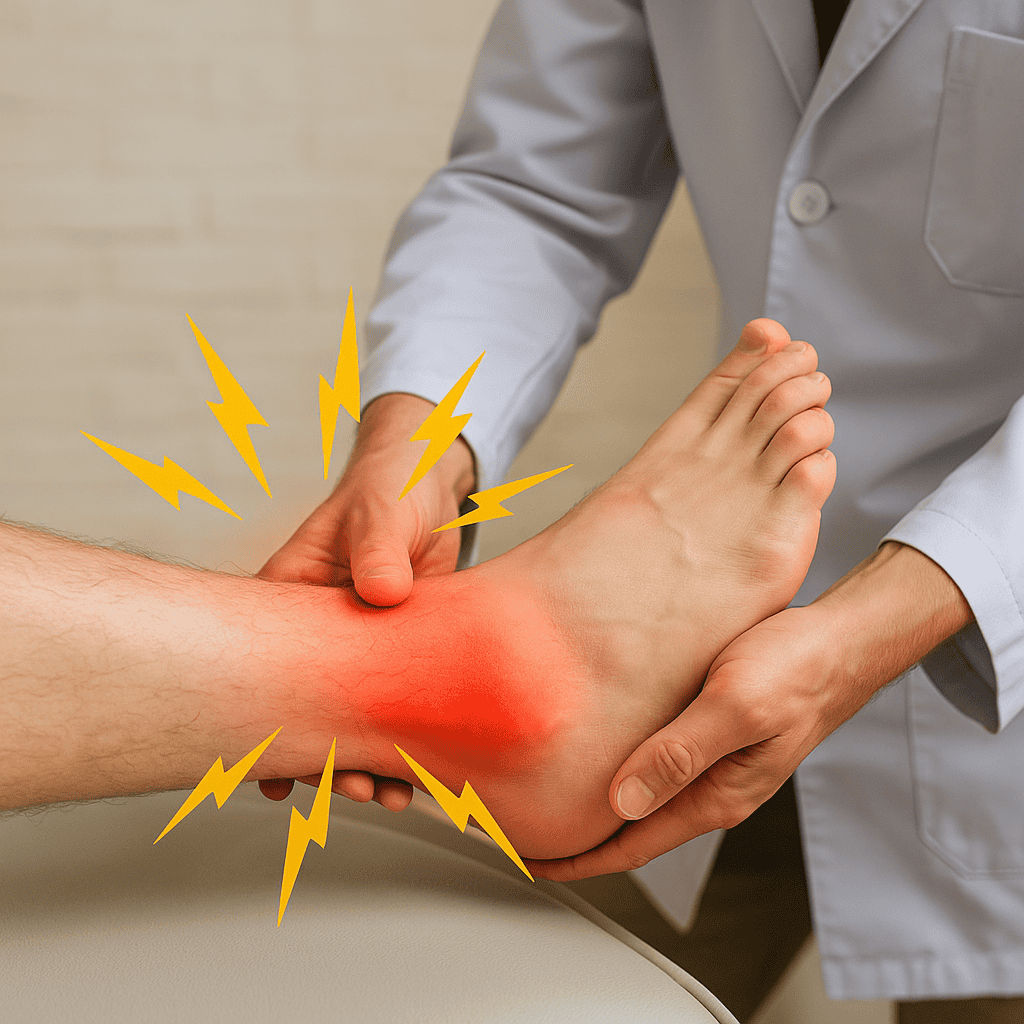
Even a mild sprain causes tiny fibres in the ligament or joint capsule to stretch or tear. Your body responds immediately by sending blood, nutrients, and immune cells to the area to initiate repair—a process central to effective treatment for sprains.
Inflammation:
- clears out damaged tissue
- increases circulation
- activates fibroblasts
- prepares the joint for healing
1. The Body Is Hardwired to Overreact
In early human history, a sprain came with:
- dirt and bacteria
- structural damage
- difficulty resting the joint
To protect you, the immune system evolved to overcompensate, sending more inflammation than technically needed.
This survival mechanism remains today, even though our environment has changed.
2. Nerves Amplify the Swelling
When tissue is injured, the nerves in and around the joint release inflammatory chemicals such as:
- Substance P
- CGRP
- Neurokinin A
These chemicals increase blood flow and make blood vessels leakier, drawing more fluid into the injury.
This nerve-driven process — neurogenic inflammation — can create a large swelling response even when the sprain is mild.
3. Your Immune System May Be "Primed"
If you've recently experienced:
- allergies
- asthma
- sinus inflammation
- infection
- high stress
- previous joint injuries
… your immune cells become hypersensitive.
This means they respond to even a small sprain with a large inflammatory wave.
4. Poor Lymphatic Drainage Traps Fluid
Swelling increases when fluid cannot drain away from the joint effectively.
This happens when:
- nearby muscles tighten
- the limb is kept still for too long
- lymphatic vessels are compressed
When drainage slows, fluid becomes trapped, and swelling can look much larger than the actual tissue damage.
Gentle, safe movement often reduces swelling faster than total rest.
5. Your Baseline Inflammation Matters
Some people naturally have a higher baseline level of inflammation. Common factors include:
- low omega-3 intake
- diets high in seed oils and processed foods
- poor sleep
- chronic stress
- respiratory or sinus inflammation
- hormonal changes
When baseline inflammation is already elevated, even a mild sprain can create an excessive swelling response.
6. Is All This Inflammation Bad?
Not always. Inflammation is a crucial part of the healing process.
The goal is not to eliminate inflammation completely, but to prevent it from becoming excessive, painful, or prolonged.
Supporting the body during this phase facilitates healing of injuries.
How Farrelly Chiropractic Helps Reduce Excessive Inflammation
At Farrelly Chiropractic, we use safe, gentle, and evidence-based methods to help your body transition from excessive inflammation into proper healing. Every strategy is designed to reduce unnecessary swelling while supporting tissue repair.
- Joint mobilisation to improve movement and reduce trapped fluid
- Techniques to decrease protective muscle tension
- Strategies to enhance lymphatic drainage
- Guidance on safe, progressive loading
- Movement pattern correction to prevent re-injury
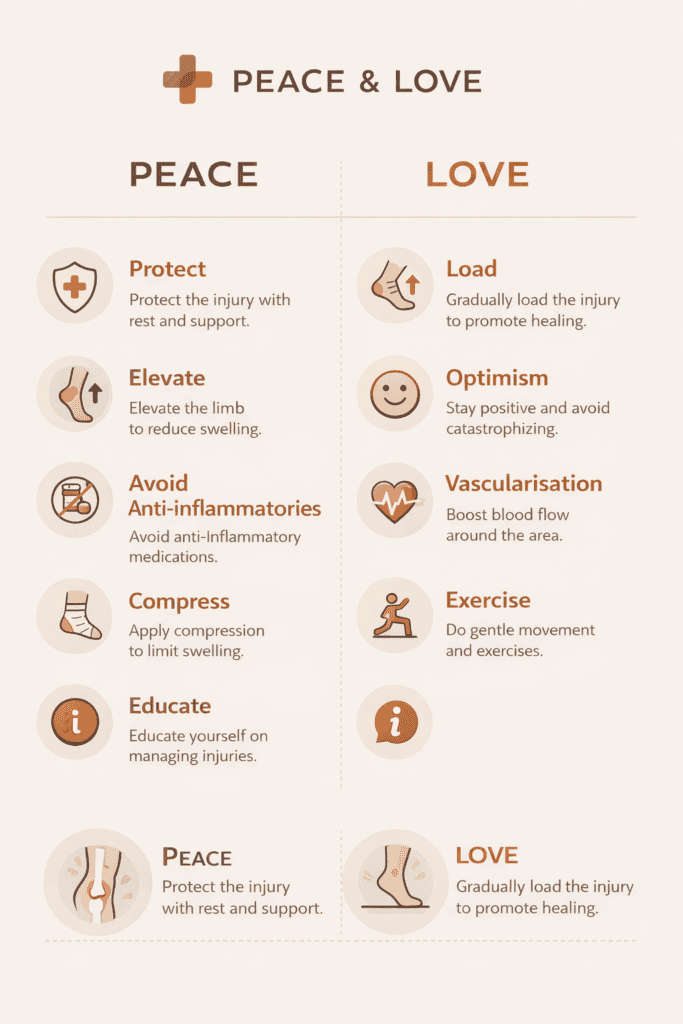
What You Should Do After a Sprain (PEACE & LOVE)
The PEACE & LOVE framework was introduced in the British Journal of Sports Medicine and reflects modern, evidence-based management of sprains.
PEACE (first 48 hours)
- Protect
- Elevate
- Avoid anti-inflammatories
- Compress
- Educate
LOVE
- Load progressively
- Optimism
- Vascular exercise
- Exercise rehabilitation
The PEACE principles help limit unnecessary inflammation early while still supporting effective recovery from sprains.
Need help recovering from a sprain?
At Farrelly Chiropractic, we help guide the healing process after sprains by reducing unnecessary inflammation, improving movement, and supporting a safe return to activity.
Recovery doesn't stop once the swelling settles. Staying active with gentle walking can support healing. If pain persists, our guide on anti-inflammatories after an injury may help.